

Italian wine pairing begins where the character of a wine meets the flavors of a dish.
Across Italy, this relationship has developed through regional ingredients, local grape varieties, and ways of cooking. It reflects a food culture in which balance matters more than rigid rules, and the right pairing reveals something new about both the wine and the recipe.
A crisp, mineral white, for example, can enhance the delicate freshness of seafood; a structured, full-bodied red can complement the rich depth of slow-cooked meat; and a lively sparkling wine can bring bright, convivial energy to the opening of a meal.
For wine lovers, restaurant professionals, buyers, and distributors, this guide offers a practical starting point for pairing Italian wine and food across different dishes and occasions.
How to pair Italian wine with food
The simplest way to pair Italian wine with food is to consider the weight, intensity, and dominant sensations of the dish as a whole. A light appetizer, for example, usually calls for freshness, while slow-cooked meat needs greater body.
The ingredients, however, are only the beginning: the crispness of fried food, the flavors introduced by herbs and spices, or the smoky notes left by the grill can all influence the choice of wine.
Five principles can guide most pairings:
- Match intensity: delicate dishes need wines that will not overpower them, while rich preparations call for structure and persistence. Food and wine should remain equally recognizable.
- Use acidity to refresh: crisp wines can lighten fried foods, creamy sauces, and fatty ingredients by cleaning the palate between bites.
- Consider tannins with protein: tannic reds generally become rounder alongside meat and aged cheeses, where protein and fat soften their firmer sensations.
- Balance sweetness and heat: spicy or sweet dishes can make a dry, highly alcoholic wine seem sharper. A softer style or gentle residual sweetness can restore balance.
- Look for territorial continuity: foods and wines from the same region often share a cultural affinity. This invites discovery without preventing experimentation.
Contrast and continuity can both create successful pairings. The essential principle (best kept in mind and on the palate) is that neither food nor wine should disappear. A wine’s acidity, for instance, can balance the richness of a dish and refresh the palate, while its aromatic profile may echo the herbs or spices used in the recipe.
Since every recipe changes through its ingredients and cooking method, successful pairing calls for an equally varied selection of wines.
This is where Cantina Tombacco 1919 Group’s research across Italy’s wine regions takes shape: in the richness and diversity of wines, each expressing a distinctive combination of grape variety, territory, winemaking style and culture.
Italian wine pairing by dish and occasion
The right pairing follows both the character of the recipe and the progression of the meal.
Prosecco for aperitivo and light appetizers, structured whites for seafood, and Mediterranean reds for pasta, pizza, meat, and flavorful cheeses: the following examples show how different Italian wines can find their place at the table – and sometimes become part of the conversations, stories, and connections that unfold around it
Prosecco for aperitivo and appetizers
For aperitivo and light appetizers, freshness comes first. Prosecco DOC Spumante Bio Vegan Extra Brut from 47 Anno Domini, another company belonging to Cantina Tombacco 1919 Group, offers fine, persistent bubbles, fresh acidity, and the classic fruity and floral notes of Glera, with green apple standing out. Its very dry profile makes it particularly suited to raw seafood appetizers and succulent fish dishes.
It can accompany appetizers, cold cuts, fish, risotto, and white meats, becoming a flexible opening choice and a great option to match with subsequent dishes and recipes during the meal.
Seafood and white meat: when freshness needs structure
Seafood, grilled fish, and simply prepared white meats need freshness, but can also be enhanced by a structured white wine. Pecorino IGT Terre di Chieti, for example, combines acidity with a savory, mineral profile, aromas of exotic fruit and light spices, and persistence. It brings depth without overwhelming the distinctive flavors of the sea.
This indigenous grape from central Italy, rediscovered in Abruzzo, also brings a distinctive regional story to the menu.
Alongside this distinctive territorial expression, Pinot Grigio DOC delle Venezie offers a versatile and immediately recognizable option for the U.S. and international markets. With exotic fruit, apple, and delicate white-flower notes, refined acidity, and a savory, persistent finish, it pairs naturally with fish appetizers and pasta dressed with seasonal vegetables.
How to pair wine with Italian pasta and risotto? Follow the recipe
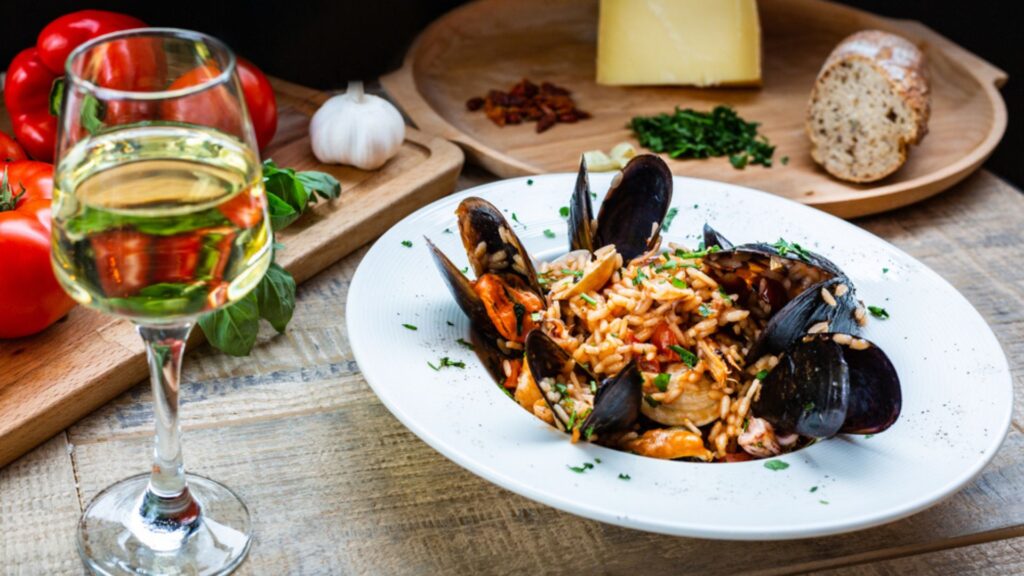
When pairing wine with Italian pasta, the sauce usually guides the choice. Linguine ai frutti di mare pasta find a natural partner in Pecorino IGT Terre di Chieti; Falanghina IGT del Beneventano offers another option, combining a fresh, pleasantly acidic profile with the persistence needed for shellfish sauces and mussels. A vegetable risotto can pair with Prosecco or Franciacorta DOCG Pas Dosé, whose very dry style and fine, persistent perlage bring freshness to the creamy texture.
Pasta al pesto follows another direction: basil, olive oil, garlic, pine nuts, and cheese call for a fresh, aromatic white with lively acidity. Baked pasta, meat ragù, and richer tomato sauces invite a warm Mediterranean red.
Moving south to wines from Puglia and Sicily, Negroamaro IGT Puglia has blackberry, coffee, cinnamon, tannic structure, and a dry finish suited to substantial first courses.
Smoother Nero d’Avola DOC Sicilia , instead, has red berry, spice, balsamic, and vanilla notes and pairs well with baked pasta.
Both wines bring Mediterranean warmth and character to richer Italian recipes.
What wine goes with Italian pizza?
What wine goes with pizza? It is a question many wine lovers have probably asked themselves more than once—and the answer starts with the toppings.
A crisp sparkling wine or fresh white – such as Prosecco DOC Spumante Bio Vegan Extra Brut – can complement the acidity of tomato and balance the richness of mozzarella. Pinot Nero Rosato IGT Veneto is another popular and versatile option for Margherita and vegetable pizzas, bringing elegant floral notes followed by nuances of red fruit and cherry.
Richer toppings, such as sausage, cured meats, or mushrooms, may call for a medium-bodied red with moderate tannins. Raboso IGT Veneto brings a dry, savory, harmonious profile with good acidity, while Nero d’Avola DOC Sicilia offers smoother tannins and warm notes of red berries, spice, and balsamic nuances.
The principle is simple: choose freshness for lighter combinations and greater structure for more intense flavors.
Which Italian wines pair with meat and flavorful cheeses?
Red meat, roasts, and game generally call for body and persistence. Aglianico IGT del Beneventano is full, savory, and persistent, with cherry, plum, and spice notes that suit roasted red meats. Le Argille Cabernet IGT Veneto offers a warmer, more complex expression, with ripe berry aromas, soft tannins, and the structure required by game and elaborate meat dishes.
Italy’s cheeses open an equally varied route through flavors and territories. Fresh, creamy cheeses such as Mozzarella di Bufala Campana or burrata from Puglia can meet the lively bubbles of Prosecco or the fine, persistent perlage of Franciacorta DOCG Pas Dosé, whose freshness balances their creamy texture.
More mature cheeses, including Parmigiano Reggiano, Grana Padano, and aged Pecorino, have the intensity and persistence to accompany structured reds such as Biferno DOC Rosso Riserva, Malanotte del Piave DOCG, or Batista Cabernet Merlot IGT Veneto. Their body, ripe-fruit character, and tannic structure allow both the cheese and the wine to remain expressive.
Dessert follows a different principle: the wine should be as sweet as, or sweeter than, the dish. The choice should follow the sweetness, texture, and main flavor of the recipe.
An Italian wine guide for international menus
An Italian wine selection can take international guests on a journey through different territories, grape varieties, and winemaking traditions. They can move from Veneto sparkling wines to mineral Abruzzo whites and the warm reds of Puglia and Sicily. Each bottle introduces a region, a grape variety, and a different expression of Italian food culture.
Through its ongoing research across Italy’s wine regions, Cantina Tombacco 1919 Group brings this diversity together in a broad and distinctive wine range created for contemporary international menus.
For restaurants, distributors, and international buyers, a useful Italian wine selection should also work as a menu, not merely as a list of famous denominations. Every wine needs a clear role and a story that can be communicated with both precision and passion:
- Begin with recognition: a well-known Prosecco offers an accessible entry point for aperitivo, receptions, and different courses, welcoming consumers into a broader Italian selection.
- Create room for discovery: introduce rediscovered native grapes or wines such as Biferno DOC rosso riserva, Aglianico IGT del Beneventano or Pecorino di Chieti IGT with a clear gastronomic identity, adding regional depth without becoming too difficult to understand.
- Offer complementary wines as possible alternatives: for example, Primitivo brings roundness and concentration, while Negroamaro offers a drier, more structured expression for different pasta, meat, and cheese pairings.
- Connect wine to occasion: every wine should answer a precise demand, from an opening glass to a substantial main course.
Balancing familiar names with less expected discoveries helps restaurants tell a fuller Italian story. For distributors and buyers, it creates an assortment for different audiences and occasions while preserving a recognizable identity.
This broader vision and approach guide Cantina Tombacco 1919 Group offer. Within this framework, we select wines with recognizable origins and distinctive personalities for international markets and contemporary menus.
Italian wine pairing ultimately begins with attention: to the dish, to the occasion, and to the people who will experience it. When these elements meet, wine becomes more than an accompaniment. It carries the light, aromas, and traditions of its place of origin into a new setting, becoming part of the story and memories the meal will leave behind.
Would you like to develop an Italian wine selection for your market, restaurant group, or distribution portfolio? Contact Cantina Tombacco 1919 Group to discover our wine range and request product information or samples for international markets.